What Is Alpine Milk Chocolate? Alpenmilch Explained


What is Alpine milk chocolate?
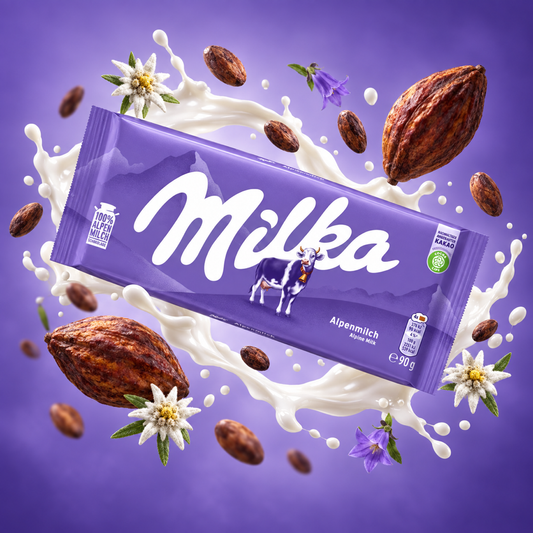
Alpine milk chocolate, Alpenmilch in German, means chocolate made with milk from cows kept in the Alpine region. It is on the front of Milka and Ritter Sport bars because in Germany and Switzerland it is understood as a claim about the milk, not a flavour name.
British shoppers usually read it as marketing language. It is closer to a regional description, in the way that Cornish clotted cream tells you where the cream came from.
What Alpine milk actually refers to
The Alpine region covers parts of Austria, Switzerland, southern Germany and northern Italy, and dairy farming there is largely pasture-based, with herds grazing mountain meadows through the summer. That is the basis of the claim: milk from those herds, rather than milk of any particular chemistry.
Whether it changes the taste is genuinely debated. What is not debated is that German brands consider it worth printing on the wrapper, and that customers there recognise it as a mark of a certain kind of chocolate.
How it compares to a British milk chocolate bar
The honest comparison is that they are aimed at different palates rather than that one is better.
A typical British milk chocolate is sweeter and tends towards a caramelised, slightly malty note, partly because of how the milk is processed before it reaches the chocolate. Alpine milk chocolate is usually creamier and milder, with less of that caramel edge and a softer melt. It reads as smoother rather than richer.
If you find British milk chocolate a little sweet, this is the direction that will suit you. If you love it precisely for that, an Alpine bar can taste slightly plain at first.
Where you will see it
Milka builds its whole identity on it, and the lilac wrapper is one of the most recognisable in European confectionery. Ritter Sport uses Alpine milk in its milk chocolate squares too, where the same creaminess sits behind the fillings.
The term turns up on other German bars as well, which is why it is worth knowing what it means rather than treating it as a brand word belonging to one company.
Alpenmilch and the other words on a German wrapper
A few more terms travel with it, and knowing them saves guessing at the shelf.
- Vollmilch is whole milk, and it is the standard German milk chocolate.
- Zartbitter is plain dark chocolate.
- Halbbitter sits between the two, less sweet than milk but softer than a full dark.
- Alpenmilch tells you about the milk rather than the cocoa, so it can appear alongside any of them.
That last point is the one people get wrong. Alpenmilch is not a strength rating, so it says nothing about how dark or sweet the bar is.
Does it melt differently?
In practice, a little. The creamier composition tends to give a softer melt at room temperature, which is pleasant to eat and slightly less convenient in a warm car or a summer post. Keep it somewhere cool and it behaves perfectly well.
What we stock
Our Milka Alpine Milk Chocolate bar in 90g is the standard German bar, large enough to share or to put out with coffee.
You will find the rest of the German bars, Alpine and otherwise, in our German chocolate bar section, which is the sensible place to compare a few side by side.
The short answer
Alpenmilch means Alpine milk, and it describes where the milk came from. In the bar it shows up as creamier and milder than a British milk chocolate, with less caramel sweetness. If you have ever thought a chocolate bar was too sweet, start here.
What we stock
-
Milka Alpine Milk Chocolate Bar | 90 g
Regular price £2.49 GBPRegular priceUnit price per